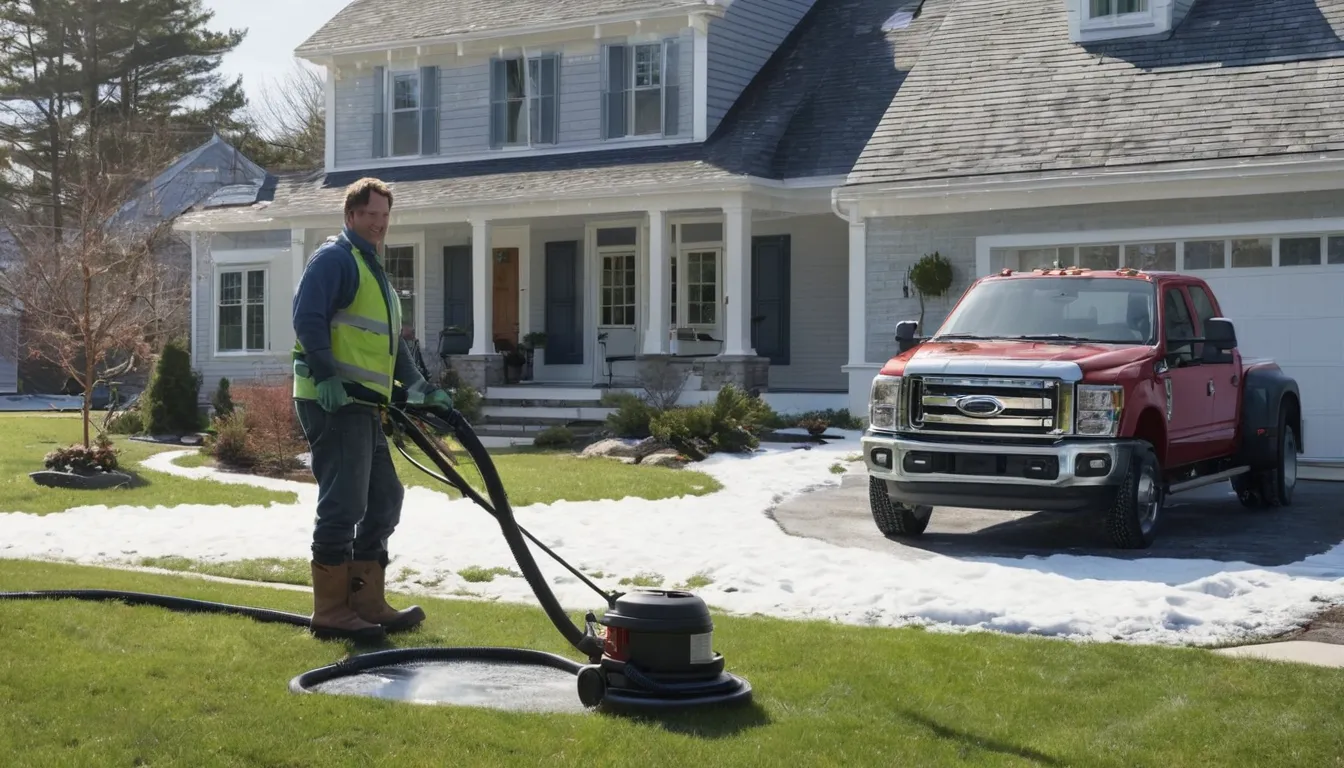
Septic Tank Pumping
Pumping clears built-up solids from your tank, and a local provider in our network can do it properly.
Not sure if your septic problem is a quick fix or a job for a pro? Hadcompletion Septic connects you with independent local providers who can inspect, pump and repair, and give you a written quote.
No obligationMany household tanks need pumping every three to five years, but it depends on tank size, how many people live in the home and how much water you use. A provider can check sludge levels and suggest a schedule that fits your system.
You can handle small things, like spreading out laundry loads and fixing leaky fixtures. Opening the tank, digging, or treating a soggy drainfield takes pro equipment and safety gear. Tank gases are dangerous, so keep lids closed and call a provider.
Typical U.S. pumping often runs roughly $300 to $650, though tank size, access and distance can push it higher or lower. Ask for a written quote that lists what is included before you agree to anything.
No. Hadcompletion Septic is a referral service. We connect you with independent providers in our network. The provider does the work, gives you the estimate and sets the price. Requesting an estimate carries no obligation.
Some policies may cover sudden damage, but many exclude wear, age and lack of maintenance. Check your policy and ask your insurer directly. Providers can often help document damage for a claim, such as with notes and photos. Coverage depends on your policy, so do not assume it applies until you ask.
Tell us about your septic or sewer problem and request an estimate. A local provider from our network will follow up with questions and a written quote.
No obligationProviders in our network handle two main jobs. Septic tank pumping keeps solids moving out of the system. Septic system repair covers leaks, failed parts and drainfield trouble. Pick the one that fits, or let a provider help you decide.
Pumping clears built-up solids from your tank, and a local provider in our network can do it properly.
Slow drains, wet yard spots or a sewage smell? Here is what is fact, what is myth, and what to do.
What to expectWe connect homeowners with independent local septic providers, so you can compare estimates and choose with confidence.
A lot of people think a septic tank only needs attention when something smells bad or a drain starts to gurgle. In practice, the quiet years are when the tank is slowly filling with solids. By the time you notice a problem, the fix is often bigger than it had to be.
Hadcompletion Septic is a referral service for homeowners in Vandergrift, PA, and the Vandergrift area. We do not pump tanks or fix drainfields ourselves. We connect you with independent providers in our network who do. You describe what is going on, and a local provider follows up with questions and an estimate.
Here is the plain split. You can watch your drains, keep track of when the tank was last pumped, and keep heavy vehicles off the area. The digging, the pump truck, the baffle checks and the drainfield work belong to a pro with the right equipment.
Ready to see what your job might look like? Request an estimate and share a few details about your system.
Prefer to talk it through? Request a callback to check provider availability in your part of the Vandergrift area.
Let's clear this up first. Hadcompletion Septic is not a pumping company and not a repair crew. It is a referral service. You send a request, and it goes to independent local providers in our network. The provider, not Hadcompletion Septic, does the work and sets the price.
A common myth says pumping is only for tanks that back up. The fact is that regular pumping keeps solids from slipping into the drainfield, where they clog the soil. Many household tanks are pumped every three to five years, but tank size, household size and water use change that. A provider may also check the baffles and lid while on site. If a tank is already overflowing, ask about emergency septic cleaning when you reach out.
Another myth says a soggy yard means the drainfield is dead. Sometimes it is a cracked pipe, a failed baffle or a pump problem. A provider can trace the cause before anyone talks about drainfield repair. If you also rely on a private well, mention it, since some providers handle water well service questions or can point you in the right direction.
Tank size, access, distance to the disposal site and how full the tank is all move the price. In the U.S., pumping often runs roughly $300 to $650. Repairs vary widely, from a few hundred dollars for a small part to many thousands for a drainfield. Always ask for a written quote.
Requests come from homeowners across Vandergrift and the Vandergrift area. The region has cold, snowy winters, frost that works deep into the ground, and heavy spring snowmelt. Coastal storms add even more water to soil that is already wet. All of that puts stress on septic systems.
Many homes here are older. Full basements, stone and block foundations, multi-family buildings and Cape Cod style houses are common. Older houses often have older tanks, tight access and pipes that have shifted over the decades. A provider who works in your area has likely seen these setups before.
A few myths show up often in this climate. One says deep snow means the system is safe all winter. Another says a soggy spring lawn is only snowmelt. Sometimes it is. Sometimes it is a tank or drainfield that cannot take any more water. A local provider can tell the difference.
If your yard, basement drains or toilets are acting strangely, request an estimate and describe what you see.
Want to ask about availability first? Request a callback and a provider in our network can tell you what is possible in your area.
Wipes labeled flushable often do not break down. They tangle in pumps and pile up in the tank. Stick to toilet paper and human waste. The trash can is the safer place for everything else.
Long showers, back-to-back laundry loads and a running toilet send a lot of water into the tank at once. Solids get pushed along before they can settle. Spreading out your water use gives the tank time to work.
Slow drains, gurgling, sewage smells, and damp or unusually green patches over the drainfield all deserve a look. They rarely fade on their own. Early checks usually cost less than late ones.
Keep vehicles and plows off the tank and drainfield. Packed soil and packed snow let frost reach deeper. In spring, notice whether the yard stays soggy long after the snow is gone.
Store-bought treatments are sold as a shortcut. In practice, they do not remove the layer of solids that builds up in the tank. Only pumping does that.
Homes with a well and a septic tank share the same ground. Mention the well when you request an estimate. Some providers offer water well service, and others can suggest who does.
Find the lid if you can, gather past pumping records and clear a path. Note your symptoms and when they started. This helps the provider quote more accurately.
Ask what is included, how disposal is handled and whether extra digging adds to the price. A written quote makes it simple to compare options and avoid surprises.
Tell us what is happening with your septic system, and a local provider from our network will reach out. Sharing the address area, the symptoms and the last pumping date helps them give a clearer quote. There is no obligation to accept it.
Request a callback to check provider availability, since hours vary by provider.
Tell us about your septic or sewer problem and request an estimate. A local provider from our network will follow up with questions and a written quote.
No obligation